Chest training for hypertrophy works best when you can control a few useful movements, perform enough hard sets, and progress them over time. Build around stable pressing, use flyes where they add value, and adjust weekly volume to your recovery.
For hypertrophy, build the routine around stable pressing, add direct chest isolation where it earns its place, and treat weekly volume as an adjustable dose rather than a sacred number. The best chest program is not the one with the most angles. It is the one you can attack hard, recover from, and progressively improve.
Chest Training for Hypertrophy: Choose Productive Exercises
A chest exercise earns its place when it lets you load the pecs through a useful range of motion, train hard with controlled technique, and repeat that performance consistently enough to progress. That can describe a barbell bench press, dumbbell press, machine press, cable fly, pec deck, or several other movements. Equipment matters less than what the movement lets you do.
Stability matters because hypertrophy work is not a balance contest. A highly stable machine may be an excellent choice if it lets you push the chest close to its limit without technique breaking down first. Free weights remain useful because they are simple, measurable, widely available, and easy to progress. There is no medal for choosing the hardest-to-stabilize version.
Range of motion matters too. Research comparing resistance-training ranges generally supports training through a large, controlled range, particularly when that range exposes the muscle to meaningful tension at longer lengths. That does not mean forcing your shoulders into the deepest position anatomy will permit. The useful range is the range you can own: controlled lowering, no bouncing, no painful stretch, and no position where the joint becomes the obvious weak link.
The test is brutally practical: can you make the pecs work hard, repeat the setup next week, and measure progress without the exercise turning into a fight for balance or joint position? If yes, the movement is doing its job. If the setup fails before the chest does, choose a better tool.
Presses Should Do the Heavy Work
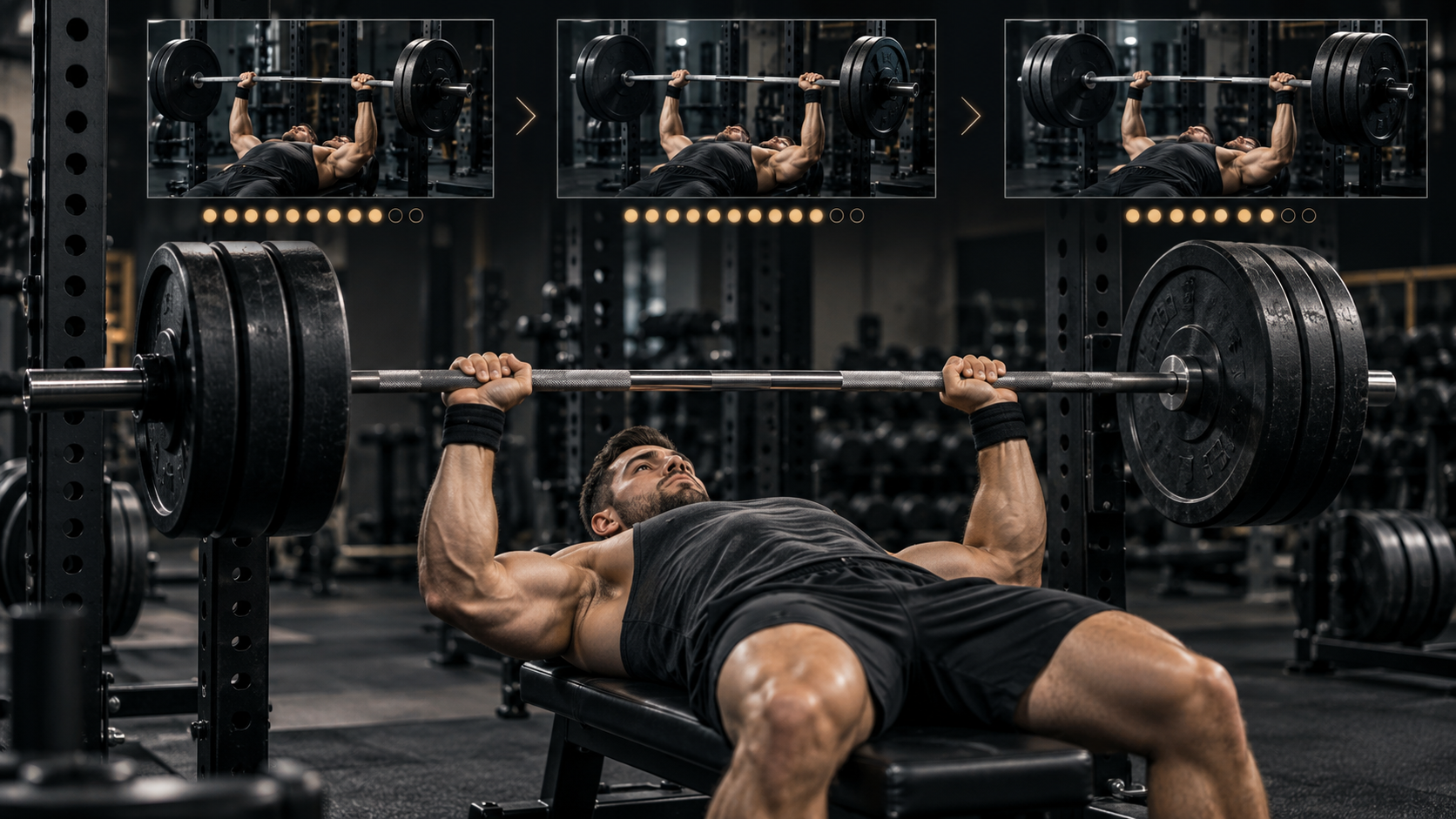
Pressing gives a chest program its backbone. A good press lets you use substantial resistance, accumulate hard repetitions, and track progression clearly. If you perform eight clean reps with a load this month and later perform ten or twelve with the same technique and similar effort, you have a useful progression signal.
Flat and low-incline pressing both belong in a hypertrophy program. Inclining the bench changes the mechanics and can shift emphasis toward the clavicular, or upper, portion of the pectoralis major. But more incline is not automatically better. As the bench becomes steeper, the anterior deltoids increasingly enter the fight. For many lifters, a modest incline is enough to create a useful variation without turning the exercise into a disguised shoulder press.
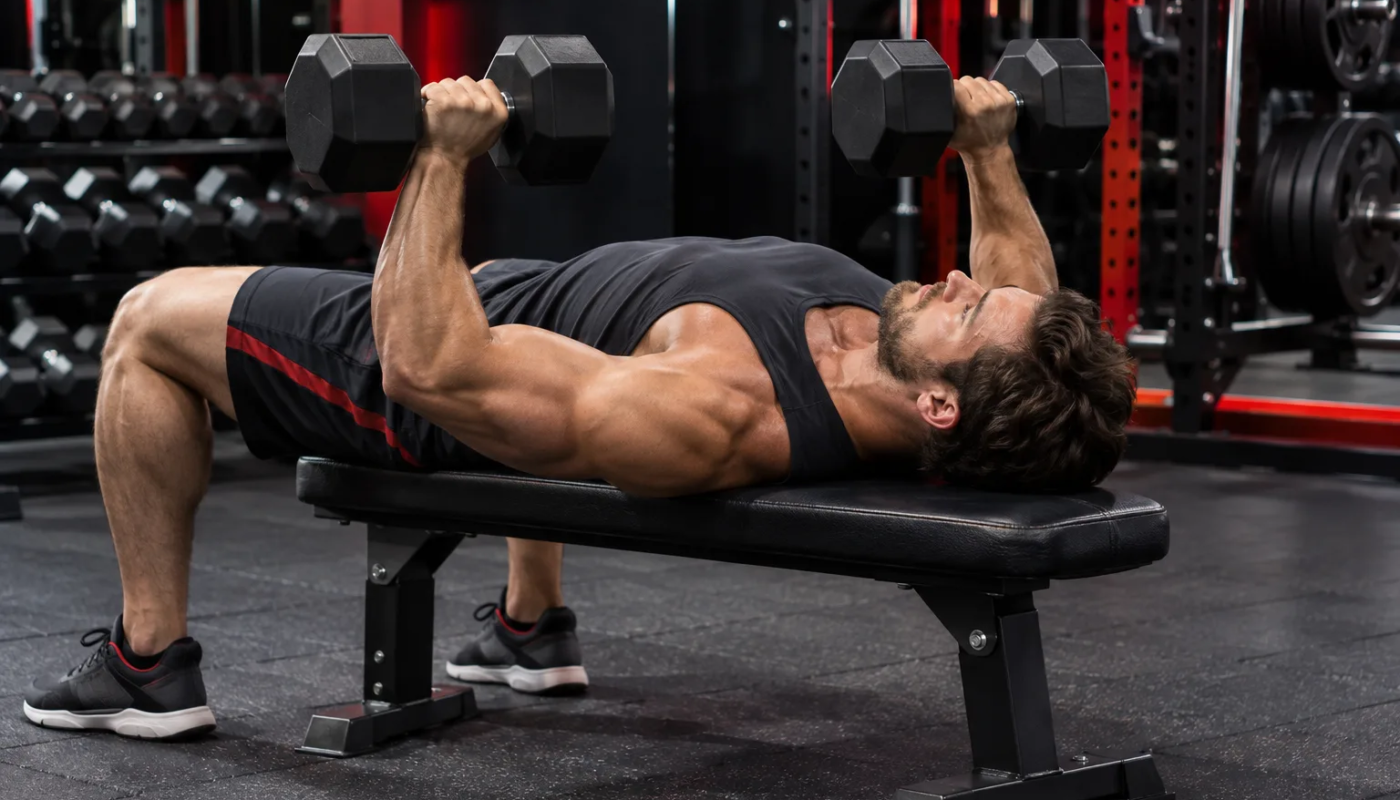
You also do not need three pressing angles in every workout. If a flat machine press and a slight-incline dumbbell press already give you two strong, progressively loadable patterns, adding another nearly identical press may create more fatigue than new stimulus.
Choose a primary press you can own for months, not one that merely feels impressive today. Then make every additional movement justify its fatigue. A second press should give you a useful change in angle, resistance profile, comfort, or loading opportunity. If it only duplicates work you are already doing well, it is clutter.
Why Use Flyes If Pressing Already Trains the Chest?
Presses train the chest hard, but the triceps and front delts are heavily involved. For some lifters, those muscles become the limiting factor before the pecs have received all the work they can productively handle.
A fly pattern changes the job. Instead of extending the elbow against a heavy load, the main task is bringing the upper arm across the body. That gives you a way to add direct chest work with much less triceps involvement. Cable flyes and pec-deck machines are especially useful because they can provide consistent resistance while allowing you to focus on controlled shoulder movement rather than balancing heavy dumbbells.
That does not make flyes mandatory. If pressing alone is producing excellent chest progress and your recovery is already near its limit, you do not need isolation work simply because a bodybuilding template says you do. But when you want more chest stimulus without adding another block of heavy pressing, a fly is often a clean solution.
Keep the movement controlled. Let the pecs lengthen under tension, then bring the arms together without turning the rep into a shoulder roll. The goal is not to see how far behind your torso you can force your elbows.
How Much Weekly Chest Volume Do You Need?
There is no scientifically proven number of chest sets that is optimal for everyone. Research does support a dose-response relationship between resistance-training volume and hypertrophy across useful ranges, but that does not mean every added set keeps producing the same return forever.
A practical starting point for many lifters is roughly 8–12 hard chest sets per week. That is a programming heuristic, not a biological law. A beginner may grow well on less. A trained lifter with excellent recovery may benefit from more. Someone whose shoulders and triceps are already taking a beating from other training may need less direct chest work than a spreadsheet suggests.
Count hard working sets, not warm-ups. And remember that set counting is an approximation. A hard bench-press set clearly trains the chest, but it also trains the triceps and anterior delts. You do not need fractional accounting accurate to two decimal places. You need a consistent way to track what you are doing and enough judgment to notice whether the work is producing results.
The strongest reason to add volume is not that an article gave you permission. Add it when performance is progressing slowly or has stalled, recovery is good, technique is stable, and you have reason to believe the chest can handle more productive work. Reduce volume when performance falls while soreness, joint irritation, or general fatigue keeps climbing.
Volume earns its place set by set. The moment extra work starts degrading performance faster than it improves the training stimulus, more has stopped meaning better.
One Chest Day or Two?
Training frequency is mainly a way to distribute your work. When weekly volume is matched, research does not show a large independent hypertrophy advantage from simply training a muscle more often.
That makes frequency a quality-management decision more than a magic growth variable. Eight hard chest sets may fit comfortably into one session. Twelve or sixteen may be better split across two sessions if the back half of a marathon workout turns strong presses into tired, shortened reps. Distribute the work wherever you can keep the sets productive.
Splitting the work can also give you two chances to perform your key exercises while fresh. That is often more useful than cramming every press and fly variation into one marathon chest day.
A Simple Two-Day Chest Example
Here is one example for a lifter who wants roughly 10 hard chest sets per week. It is not a universal prescription.
Day 1
- Flat or slight-incline press: 3 sets of 6–10 reps
- Cable or pec-deck fly: 2 sets of 10–15 reps
Day 2
- Incline or alternative stable press: 3 sets of 8–12 reps
- Cable, machine, or pec-deck fly: 2 sets of 10–15 reps
This gives you ten direct working sets split between pressing and isolation. The rep ranges overlap on purpose. Muscle can be built across a broad range of loads when sets are sufficiently demanding, so there is no need to force every chest exercise into the old 8–12 box.
Use rep ranges to make progression simple. Suppose you press 185 pounds for 8, 8, and 7 controlled reps. Keep working with that load until you can reach the top of your chosen range with the intended technique and effort. Then add a small amount of weight and build again. You are creating a progression ladder instead of randomly changing the workout every week.
For flyes, load progression matters, but control matters more. If adding weight shortens the range, turns the movement into a press, or makes you throw the handles together, the extra number on the stack is not useful progress.
How Hard Should the Sets Be?
Chest sets need to be hard enough to recruit and fatigue the target muscle, but failure on every set is not required. A useful approach is to perform most working sets close enough to failure that only a small number of clean repetitions remain.
If you finish a set of ten and could obviously have performed another eight, you left a large amount of effort unused. That may be appropriate for a warm-up or technique set, but it is a poor default for the hard working sets this routine is counting. If every press ends with the bar grinding, technique collapsing, and a spotter performing an upright row, you have gone to the opposite extreme.
Train hard enough that the set demands something from you, but keep command of the rep. The weight should challenge your strength, not expose the fact that you chose more load than you can control. Discipline is what turns effort into repeatable training instead of a weekly test of nerve.
Common Chest-Training Mistakes
The first mistake is excessive variety. You do not need flat barbell bench, flat dumbbell bench, flat machine press, incline barbell, incline dumbbell, decline press, three cable angles, and a pec deck to prove that you trained chest. Exercise variety is useful when movements provide meaningfully different advantages. Beyond that, variety becomes noise that makes progression harder to track.
The second mistake is confusing load with chest stimulus. A heavier press is valuable only if the movement still does what you selected it to do. Shortening every rep, bouncing the bottom, or radically changing your technique to move more weight may improve the number in your logbook while making the set worse for its intended purpose.
The third mistake is adding sets automatically when growth slows. A plateau can come from poor progression, insufficient effort, inconsistent training, inadequate food, poor sleep, or simply unrealistic expectations. More sets are one tool, not the default answer to every problem.
Finally, do not train through sharp chest or shoulder pain. Modify or stop the movement rather than trying to prove toughness to a joint. Controlled aggression belongs in training. Recklessness does not.
Practical Next Steps
Audit your current chest routine before adding anything. Pick one primary press you can progress reliably. Decide whether a second press contributes a useful angle or setup. Add a fly pattern if you want direct chest work without more heavy pressing. Then total your hard weekly sets and ask whether your current dose is actually producing progress.
Run the same basic structure long enough to collect evidence from your own training. If reps and loads rise while technique stays strong and recovery remains good, the program is doing its job. If progress stalls, change one variable for a reason instead of rebuilding the entire workout because a new exercise appeared on your feed.
Build the chest by stacking weeks of productive work. Own the movements. Progress them. Add work when the evidence from your training says you can use it. Cut work when quality starts to rot. You do not need a museum of chest exercises; you need a small group of tools you can make brutally effective.
Key Takeaways
- Build chest training around stable, progressively loadable presses.
- Use flyes to add direct chest work with less triceps involvement when that additional work is useful.
- Roughly 8–12 hard weekly sets can be a reasonable starting example for many lifters, but it is not a universal optimum.
- Use frequency to distribute quality work; do not treat frequency itself as magic.
- Train through a large, controlled, comfortable range of motion rather than forcing depth you cannot own.
- Progress reps and load while preserving technique, then adjust volume according to performance and recovery.
- More exercises and more sets are not automatically more growth.
Related guidance and further reading
Make each working set count: review how close to failure to train, then use progressive overload to track clean progress.
Research reference: IUSCA position stand on resistance training for muscle hypertrophy.
THE COMPLETE GET MASSIVE MUSCLES SYSTEM
Turn the article into a training decision you can actually run.
The book teaches the method. The app carries the work into the gym and turns training history into useful feedback. The workbook structures the plan, review, and diagnosis.